
Should You Replace Just the AC or the Entire HVAC System?
Your air conditioner has stopped working, and your technician recommends replacing it. But now you’re facing another question: Should you replace just the outdoor AC unit, the complete air-conditioning system, or your entire HVAC system, including the furnace?
It’s an important decision, especially in Texas, where your air conditioner works hard for much of the year.
Replacing only part of your HVAC equipment might save money upfront. However, mixing old and new components isn’t always possible, and an improperly matched system can create problems with efficiency, airflow, performance, and warranty coverage.
On the other hand, replacing a perfectly good furnace simply because your air conditioner failed isn’t always necessary.
Let’s compare your options and explain what really matters before making this investment.
🏠 1. First, Understand What’s Included in Your HVAC System
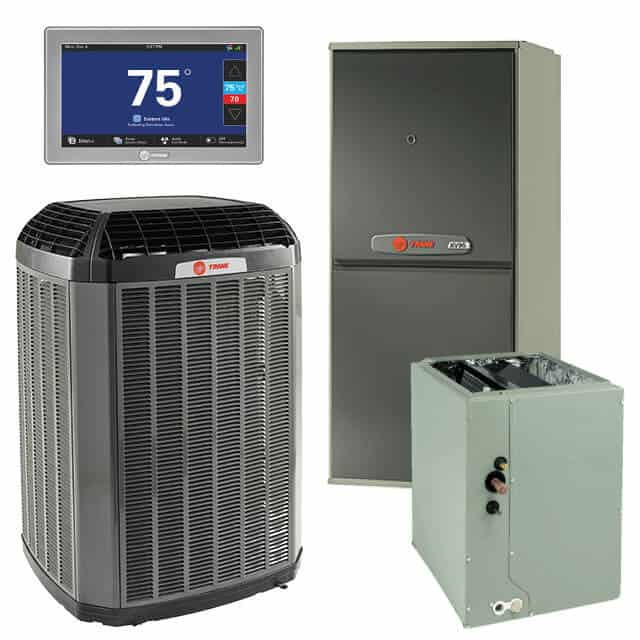
Most Texas homes with central air conditioning and gas heating have three major pieces of equipment.
– ❄️ Outdoor AC Condenser: Contains the compressor, condenser coil, and outdoor fan. It releases the heat collected from inside your home.
– 🌡️ Indoor Evaporator Coil: Typically installed above or beside your furnace. Refrigerant flowing through the coil absorbs heat from your home’s indoor air.
– 🔥 Gas Furnace and Indoor Blower: The furnace provides heating, while its blower moves air through the evaporator coil and distributes conditioned air throughout your home.
All three components need to work together for your home to receive proper cooling, heating, and airflow.
Important distinction
Replacing the complete AC system doesn’t necessarily mean replacing your furnace. A new outdoor condenser and matching indoor evaporator coil can often operate with an existing furnace if its blower, controls, and physical configuration are compatible.
⚖️ 2. Three HVAC Replacement Options Explained
Before comparing prices, it’s important to understand exactly what you’re getting.
| Replacement option | Equipment included | Main consideration |
|---|---|---|
| Outdoor AC only | New condenser | Existing indoor coil must be compatible |
| Complete AC system | New condenser + matching evaporator coil | Existing furnace must provide suitable airflow and be compatible |
| Entire HVAC system | New condenser + coil + furnace | Replaces both cooling and heating equipment |
Each option has advantages and limitations.
🔵 3. Option One: Replace Only the Outdoor AC Unit
This is typically the least expensive replacement option because you’re keeping the existing indoor coil and furnace.
However, it’s not suitable for every situation.
When does it make sense?
Replacing only the outdoor condenser may be reasonable when:
- Your indoor evaporator coil is relatively new and in excellent condition.
- Your existing coil uses the same refrigerant as the replacement condenser.
- The manufacturer confirms that the equipment combination is compatible.
- The furnace and blower are operating correctly.
- The existing system doesn’t have major airflow or comfort problems.
For example, if your outdoor R-410A condenser has failed but the indoor coil is still in excellent condition, an appropriate R-410A replacement condenser may be an option.
What are the disadvantages?
Keeping the existing evaporator coil means retaining an older component that may eventually develop problems of its own.
You may also have fewer equipment choices, particularly if your original AC uses an older refrigerant.
More importantly, installing a new outdoor unit with an incompatible indoor coil can create serious performance and reliability problems.
Don’t mix incompatible refrigerants
A new R-454B condenser cannot simply be connected to an existing R-410A indoor system that wasn’t designed and approved for R-454B. Refrigerant compatibility, equipment approval, and applicable safety requirements must all be verified.
🟢 4. Option Two: Replace the Complete AC System but Keep Your Furnace
For homeowners whose furnace is still relatively new and functioning properly, this option is often worth considering.
It involves replacing both the outdoor condenser and indoor evaporator coil while retaining the existing furnace and blower.
Potentially cost-effective
New AC + New Coil + Existing Furnace
This approach allows you to upgrade your cooling system without automatically replacing heating equipment that may still have many years of useful service.
Why replace the condenser and coil together?
The indoor and outdoor components are designed to operate together as a matched refrigeration system.
Installing a properly matched condenser and evaporator coil can help provide:
- ❄️ Correct refrigeration performance
- ⚡ Verified system efficiency
- 🌡️ Predictable cooling capacity
- 🛡️ Appropriate equipment compatibility
- 🔧 Fewer complications associated with mixing older and newer cooling components
Can an old furnace work with a new R-454B system?
Possibly, but compatibility must be verified.
The existing furnace needs to provide appropriate airflow, accommodate the new evaporator coil, and satisfy the new equipment’s control and safety requirements.
Depending on the system, additional approved refrigerant detection and mitigation equipment may be necessary.
A new coil shouldn’t be installed simply because it physically fits on the existing furnace.
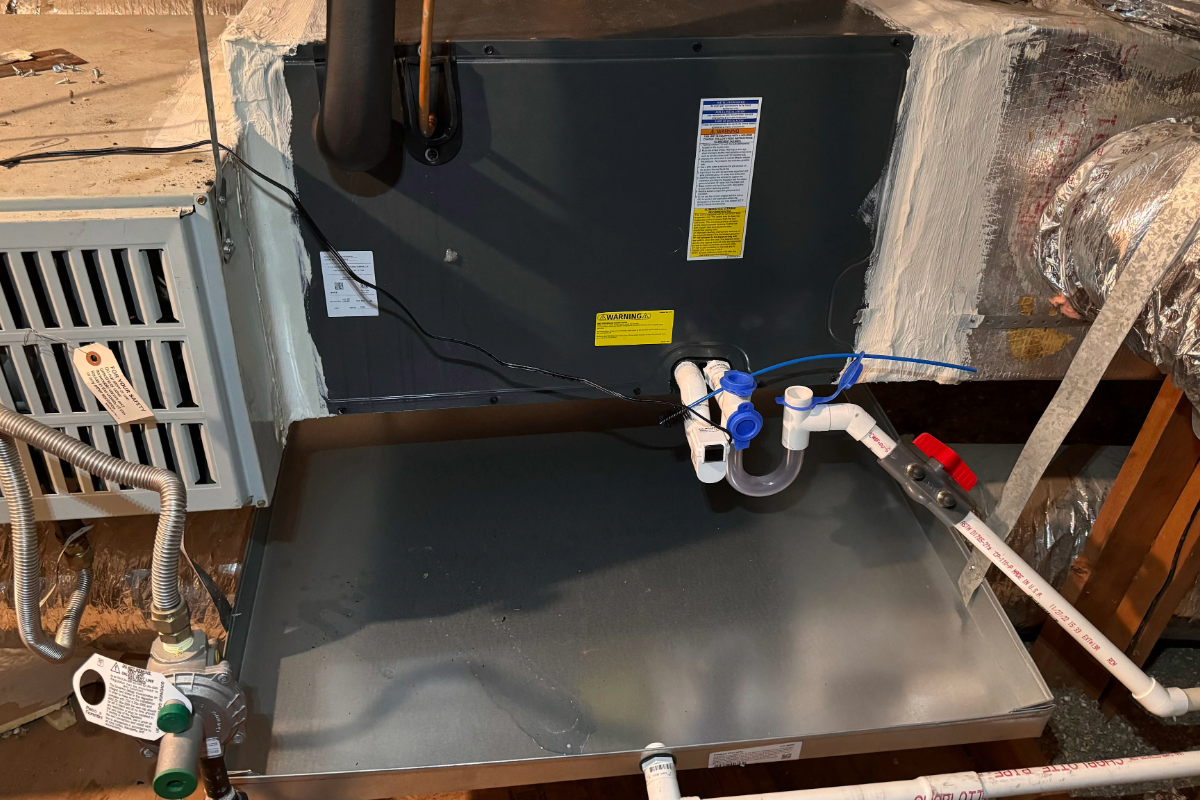
Replacing the condenser and evaporator coil while retaining a compatible furnace can reduce the cost of an HVAC upgrade.
🟠 5. Option Three: Replace the Entire HVAC System
A complete HVAC replacement involves installing a new outdoor condenser, indoor evaporator coil, and furnace.
It generally requires the largest upfront investment but gives you the opportunity to upgrade your heating and cooling equipment together.
When should you consider a complete replacement?
– 📅 Your AC and furnace are both getting older. If both systems are approaching the end of their expected service lives, replacing them together may be more practical than scheduling two separate installations.
– 🔧 You’re experiencing frequent repairs. Repeated breakdowns involving both heating and cooling equipment are a reason to compare replacement costs against continued repairs.
– 🌬️ Your existing furnace has airflow limitations. An older blower may not provide the airflow or control capabilities needed for the new AC system you’re considering.
– 🌡️ You want to upgrade heating and cooling performance. Replacing the complete system allows you to consider a high-efficiency furnace, variable-speed blower, or different heating technologies.
Airmatics Tip
If your furnace is only a few years old, operates safely, and is compatible with a new AC, there may be little reason to replace it. We recommend evaluating its condition before deciding.
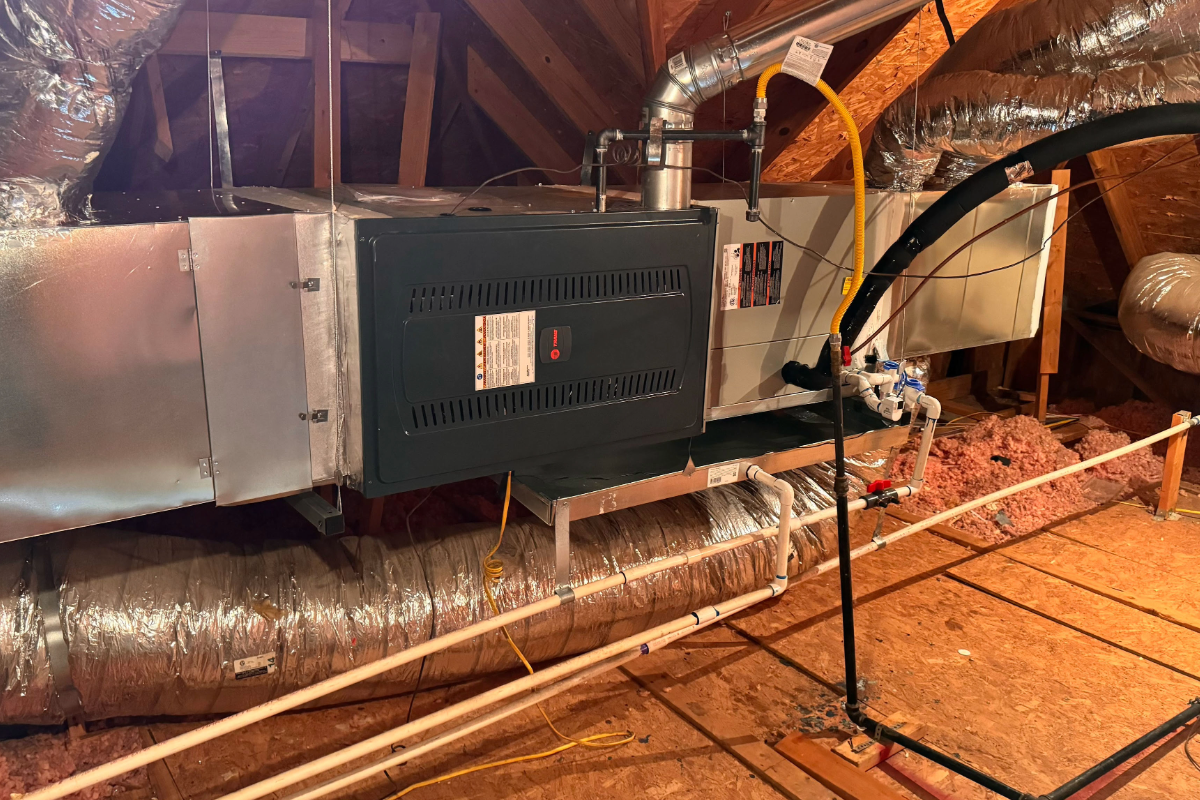
A complete HVAC replacement upgrades both cooling and heating equipment in one installation.
💰 6. Which Replacement Option Costs Less?
Generally, replacing fewer components costs less upfront. However, the lowest initial estimate isn’t necessarily the most economical long-term solution.
| Factor | Outdoor AC only | AC + Coil | Entire HVAC |
|---|---|---|---|
| Initial investment | $ | $$ | $$$ |
| New cooling components | Partial | Complete | Complete |
| New furnace | No | No | Yes |
| Retains older components | Most | Furnace | Usually ductwork |
| Cooling upgrade options | Limited by compatibility | Broad | Broad |
| Heating upgrade | No | No | Yes |
| Installation scope | Smallest | Moderate | Largest |
These are general comparisons. Actual costs depend on equipment, installation requirements, and the condition of your existing system.
Consider this example
Your outdoor air conditioner fails after 12 years. Your furnace is the same age, but it’s still operating properly.
You receive three estimates: replacing the outdoor condenser only, replacing the condenser and evaporator coil, or replacing all three components.
The outdoor-only option may look attractive initially. However, if the indoor coil fails two years later, you’ll face another repair or replacement.
Conversely, replacing a fully functional furnace may not offer enough additional value to justify the expense.
The important question isn’t simply, “Which option costs less today?”
It’s which option makes the most financial sense given the condition of your equipment and how long you plan to own the home.
🌡️ 7. What About R-410A and the New R-454B Refrigerant?
The refrigerant transition makes this decision more important in 2026.
Many existing Texas air conditioners use R-410A. Newer residential equipment increasingly uses lower-GWP refrigerants, including R-454B and R-32.
| Situation | What to know |
|---|---|
| Repairing an existing R-410A system | R-410A service and compatible replacement components remain permitted. |
| Replacing only an R-410A condenser | May be possible using a suitable replacement component for the existing system. |
| Installing a new R-454B condenser | Requires compatible equipment designed and approved for that refrigerant. |
| Replacing the complete AC system | Provides an opportunity to install a current-generation refrigerant platform. |
Current federal regulations allow qualifying remaining R-410A equipment manufactured or imported before January 1, 2025, to be installed as a new system. Replacement components used to service existing systems are subject to different requirements.
Important
You don’t need to replace a properly operating R-410A system simply because newer refrigerants are available.
However, refrigerant compatibility deserves special attention when replacing only part of an older system.
🌀 8. Don’t Forget About Your Existing Ductwork
Your air conditioner can only perform properly when the duct system delivers the necessary airflow.
Installing premium HVAC equipment doesn’t automatically solve existing ductwork problems.
Before replacing your HVAC system, it’s worth checking for:
- Undersized supply and return ducts
- Excessive static pressure
- Crushed or disconnected flexible ductwork
- Poor airflow to individual rooms
- Duct leakage and damaged insulation
- Inadequate return-air pathways
Proper residential HVAC design includes calculating heating and cooling loads, selecting appropriately sized equipment, and evaluating ductwork.
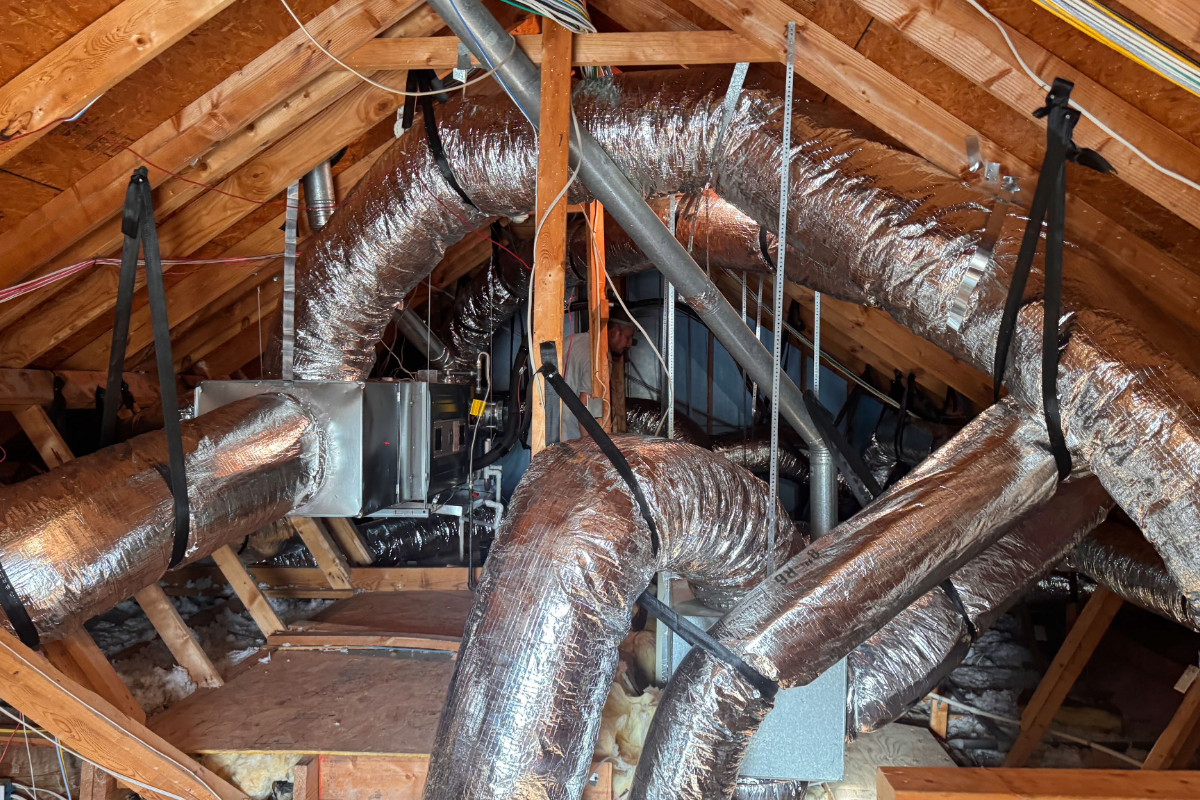
Proper airflow and duct design are essential for getting the most out of a new HVAC system.
🛡️ 9. What About Manufacturer Warranty and System Efficiency?
When purchasing new equipment, make sure the proposed combination is approved and that you understand exactly what the warranty covers.
A certified matched system can provide documented efficiency ratings for the specific equipment combination.
Before accepting an estimate, ask about the following:
| What to verify | Why it matters |
|---|---|
| Manufacturer-approved equipment combination | Helps establish component compatibility |
| AHRI certificate | Documents certified matched-system efficiency when available |
| Parts warranty | Identifies manufacturer coverage |
| Labor warranty | Explains installation-related service coverage |
| Existing furnace condition | Helps determine whether retaining it is practical |
| Ductwork inspection | Helps identify potential airflow problems |
| Installation materials | Clarifies what’s included in the quoted solution |
Replacing a condenser doesn’t automatically renew the warranty on your existing evaporator coil or furnace.
✅ 10. How Do You Make the Right Decision?
There is no universal rule that says you must replace the entire HVAC system whenever your air conditioner fails.
Use this comparison as a starting point.
| Your situation | Option worth evaluating |
|---|---|
| Recently installed indoor coil with a failed outdoor condenser | Outdoor-only replacement |
| Older R-410A AC with a worn indoor coil | Complete AC replacement |
| Relatively new, compatible furnace | New AC + coil |
| Aging AC and furnace with frequent breakdowns | Entire HVAC replacement |
| Desire to upgrade heating and cooling efficiency together | Entire HVAC replacement |
| Significant airflow problems | Ductwork evaluation before equipment selection |
These are starting points, not automatic recommendations. Compatibility, equipment condition, installation requirements, and cost should determine the final scope.
Our Approach at Airmatics
Before recommending equipment replacement, we evaluate the condition of your existing HVAC system and discuss the available options.
If your furnace is in excellent condition and compatible with a new AC, keeping it may be a sensible decision.
If both heating and cooling equipment are deteriorating, we’ll explain the advantages and costs of replacing them together.
❓ Frequently Asked Questions
Can I replace just my outdoor AC condenser?
Yes, in some cases. The replacement must be compatible with your existing indoor coil, refrigerant, and other system components. Compatibility and applicable installation requirements must be verified first.
Do I have to replace my furnace when replacing my AC?
Not necessarily. A functioning, compatible furnace may be retained when installing a new condenser and evaporator coil.
Can I install a new R-454B AC with my old furnace?
Possibly. Your furnace must have compatible airflow and controls, and the installation must satisfy the new equipment’s safety requirements. A properly matched evaporator coil is also necessary.
Should I replace my furnace and AC at the same time?
It depends on their age, condition, efficiency, and the cost of separate installations. Replacing both can be practical when both are approaching the end of their service lives.
Will a new AC work with my existing ductwork?
It may, but the duct system should be evaluated to confirm that it can deliver the airflow required by the replacement equipment.
Is replacing the condenser and evaporator coil together better?
Replacing both allows you to select a properly matched cooling system. However, replacing only a failed condenser can sometimes be appropriate when the existing indoor components are compatible and in good condition.
Will a new AC automatically lower my electricity bills?
Not necessarily. Actual energy consumption depends on equipment efficiency, proper sizing, installation quality, ductwork, thermostat settings, and your home’s cooling requirements.
🔧 Considering AC or HVAC Replacement in Dallas–Fort Worth?
Airmatics helps homeowners throughout Plano, Frisco, Allen, McKinney, Dallas, and surrounding North Texas communities compare their replacement options.
Whether you need a new air conditioner or a complete heating and cooling system, we’ll help you understand which components should be replaced and which can safely remain.
Get a FREE HVAC replacement estimate with Airmatics!
