
Air Conditioner Change: Cost and Considerations
You notice it first as a strange rattle from the box outside, then an alarming utility bill spike, and finally, a living room that won’t cool down. While paying for another quick fix seems tempting, patching a dying unit rarely pays off. Choosing a full system-level replacement ultimately makes more financial sense than an endless string of component repairs. If you’re weighing an air conditioner change or a broader HVAC replacement, this guide to Air Conditioner Change: Cost and Considerations will help you plan with confidence.
Navigating an air conditioner change feels overwhelming because industry data reveals the average cost of central air installation spans $5,000 to $12,000. If you’re asking, “how much does it cost to replace an AC unit?” understand that the AC replacement price varies widely. That frustratingly wide gap exists because replacing HVAC equipment isn’t just about swapping indoor and outdoor machines. Your home’s “invisible” factors—specifically ductwork health and insulation—drive those final numbers and dictate your whole-home comfort. Homeowners often search for the cheapest way to replace an AC unit; in practice, getting multiple bids, leveraging rebates, and right-sizing the system are smarter ways to control your a c replacement cost.
The ‘5,000 Rule’: A Simple Math Trick to Decide Between Repair and Replacement
Facing a sudden breakdown on an older unit makes figuring out when to replace an air conditioner versus repairing it incredibly stressful. Once systems pass the 12-year mark, they hit a phase of diminishing returns where efficiency drops and breakdowns multiply.
Instead of guessing, protect your budget by calculating the 5,000 Rule:
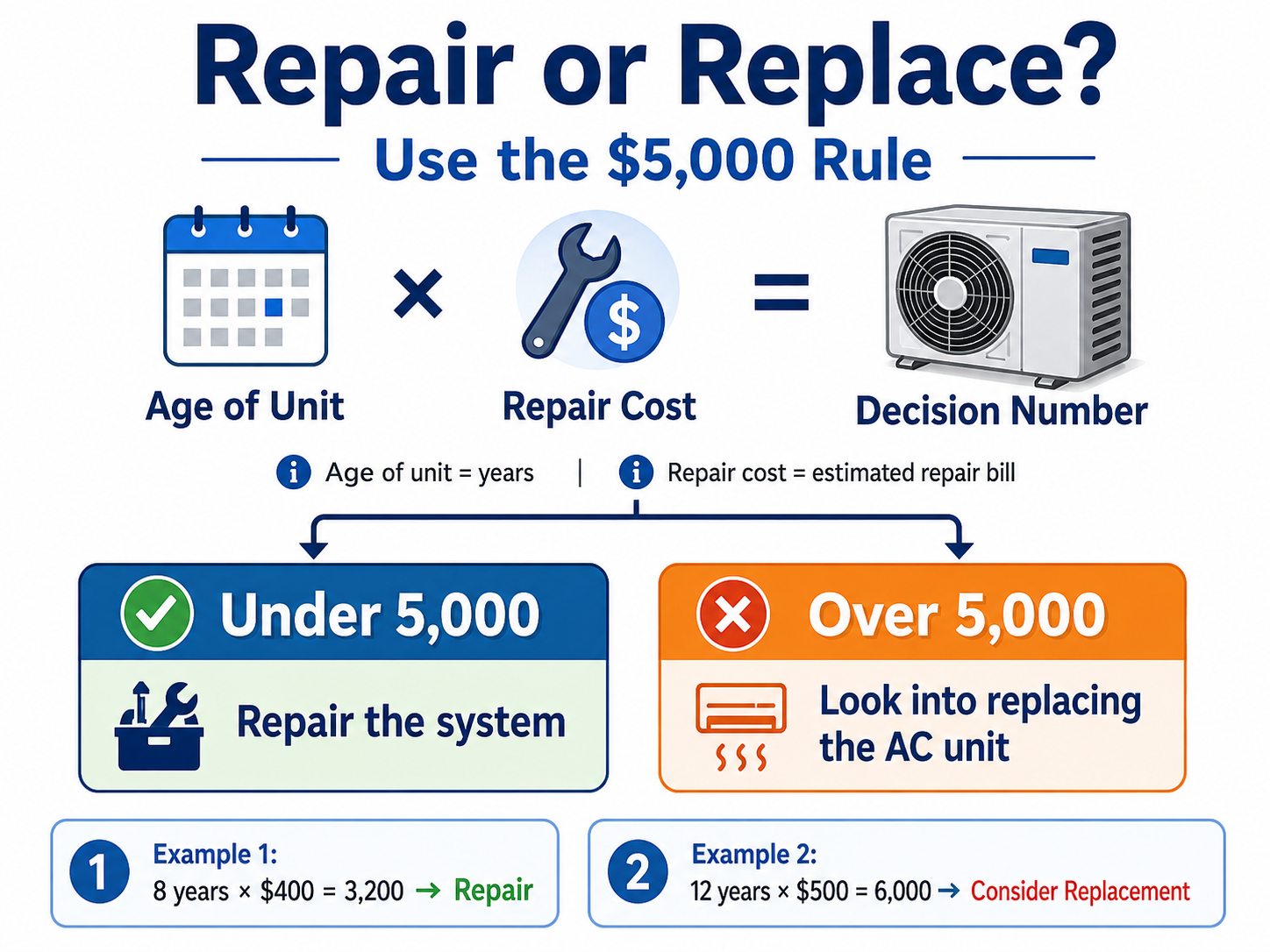
- Formula: Multiply (Age of Unit) x (Repair Cost)
- Under 5,000: Repair the system
- Over 5,000: Look into replacing the AC unit
Watch closely for signs of a failing AC compressor, like loud screeching noises or frequently tripped breakers. When this “heart” of your cooling system dies, the unit is usually finished. If the math and mechanics both point toward an upgrade, you may decide to replace air conditioner equipment entirely—essentially change AC unit rather than repair. If you’re replacing an AC or replacing an AC system, understanding the final bill becomes the immediate next step. Labor and equipment choices directly dictate whether your invoice leans toward the $5,000 or $12,000 end of the spectrum.
Breaking Down the $5,000 to $12,000 Invoice: Why Labor and Equipment Costs Vary
When researching how much does it cost to replace an AC unit, sticker shock is normal. Most homeowners assume they are paying primarily for the metal box sitting outside. In reality, standard AC replacement costs split evenly between the physical machinery and the specialized expertise required to install it properly. Your a c replacement cost reflects both the hardware and the know-how.
To understand exactly where your money goes, verify your contractor’s estimate includes these standard items:
- Outdoor condenser
- Indoor air handler
- Copper line sets
- Electrical whip/disconnect
- Permit fees
- Labor hours
Can I replace my own AC unit? Unfortunately, DIY installation violates federal law.
Most proposals will replace indoor AC unit components (air handler) and replace outside AC unit components (condenser) together to maintain warranty coverage and performance. A licensed contractor will install central AC unit components to code, pressure-test the refrigerant circuit, and verify airflow. Looking at those steep labor rates for HVAC installation, you might naturally wonder: Can I replace my own AC unit? Unfortunately, DIY installation violates federal law. The government requires an EPA Section 608 certification to safely handle the chemical refrigerants that cool your home. Paying a professional ensures your house stays safe and code-compliant. Beyond installation labor, efficiency ratings and modern refrigerants significantly impact the final price while promising long-term savings.
SEER2 and the Refrigerant Phase-Out: How Modern Efficiency Saves You $300 Annually
Shopping for efficiency is like checking a car’s miles per gallon, making SEER2 energy efficiency ratings function exactly like your unit’s fuel economy. Higher numbers cost more upfront but lower your monthly utility bills. For most residential homes, the financial “sweet spot” is typically a 15 or 16 rating, which maximizes your energy return on investment without overpaying at installation. When installing new AC, your contractor can model expected energy savings.
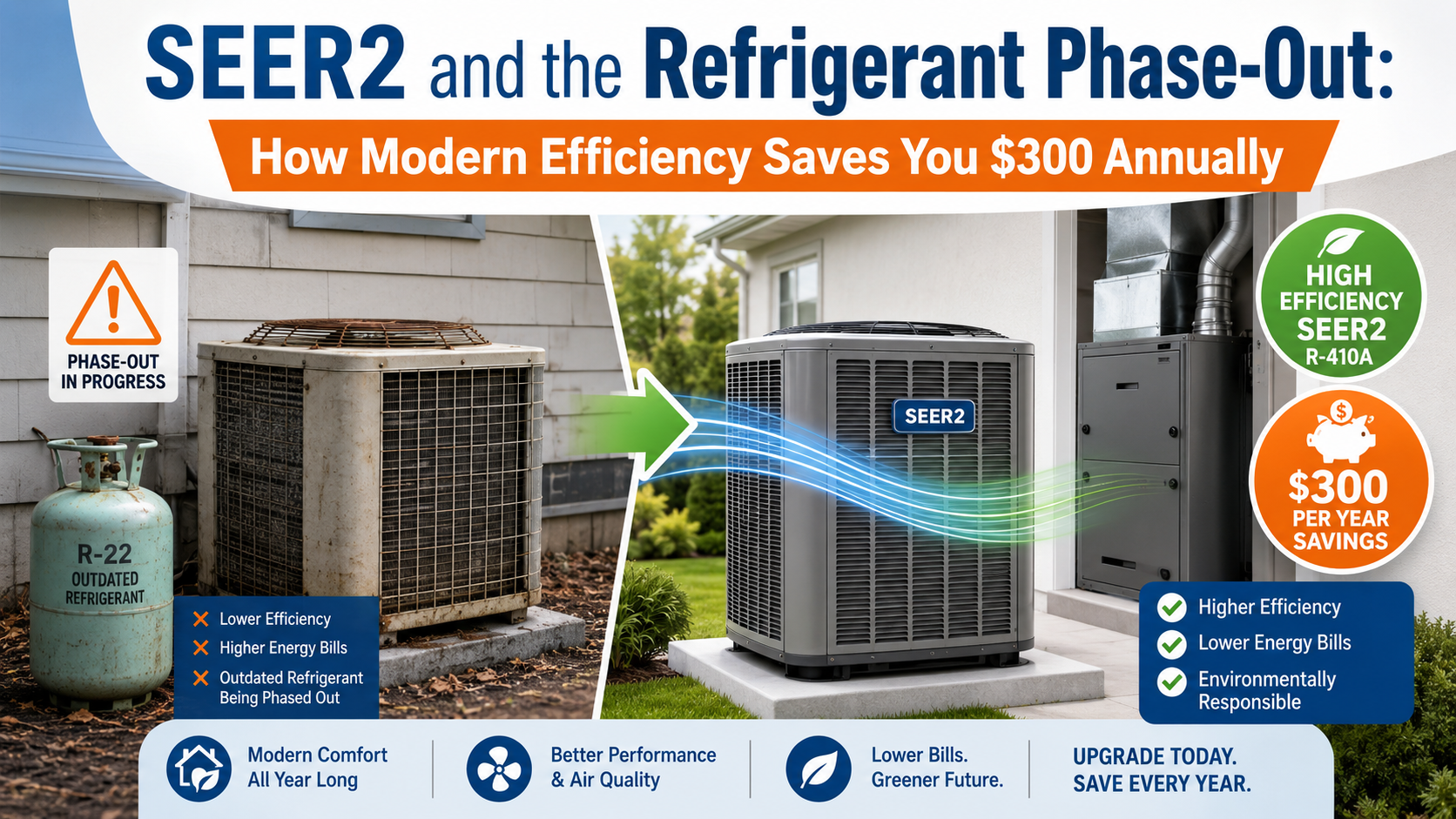
Smart decisions regarding efficiency scores and modern fluids ensure your cooling investment won’t become an expensive liability. The next major choice involves selecting the right system format to maximize federal incentives. If you prefer to replace central air conditioning and keep a gas furnace, that’s still viable; others may compare replacing central air conditioner options against heat pumps.
Heat Pumps vs. Central Air: How the Inflation Reduction Act Slashes Your Upgrade Costs
Standard air conditioners only know how to cool your house. When debating a heat pump vs central air conditioning, the magic difference is a single component: the reversing valve. Think of it like a two-way street; in summer, the system pumps heat out of your home, but in winter, this valve flips to pull free environmental heat indoors.
Figuring out how to pay for a new air conditioner is considerably less stressful today. Because modern heat pumps are incredibly efficient, they unlock exclusive federal tax credits for energy-efficient cooling. Your primary financial incentives include:
- $2,000 Federal Tax Credit (25C)
- State-specific upgrade rebates
- Utility company ‘Instant Rebates’
Upgrading to this dual-purpose technology makes total financial sense for moderate climates. If you decide to replace central air unit components instead of choosing a heat pump, you can still qualify for certain rebates tied to efficiency. However, even the highest-rated system wastes your money if it doesn’t fit properly. Precision sizing and ductwork integrity are essential to prevent premature system failure.
The Tailored Suit Method: Why Manual J Sizing and Ductwork Integrity Prevent System Failure
Assuming bigger is better for your new AC is a costly mistake. Instead of using basic HVAC sizing based purely on square footage, insist on a “Manual J Load Calculation.” Like tailoring a suit, this calculation ensures the machinery perfectly fits your home’s unique footprint. Without it, oversized systems cool too fast and shut off abruptly—a major flaw called short-cycling that wastes electricity and leaves your rooms feeling damp and humid.
Hidden ductwork dictates how well that tailored unit actually performs. Pushing modern airflow through old, undersized pipes creates high static pressure, which is exactly like trying to breathe through a pinched straw. Evaluate this infrastructure early; although the cost to replace ductwork and vents increases initial budgets, it prevents your expensive new machinery from suffocating. When installing new AC or replacing home AC system components, address leaks and undersized trunks at the same time to protect your investment. In some regions, you may hear people say “replace aircon unit” or simply “replace aircon”—the principles are the same.
Hidden ductwork dictates how well that tailored unit actually performs.
Modern setups also unlock the benefits of variable-speed blowers, delivering a continuous, gentle breeze to finally fix stubbornly hot upstairs rooms. Since equipment longevity depends entirely on execution, vetting your installer ensures these critical calculations are actually performed.
Vetting Your Installer: Three Questions That Separate Pros from Amateurs
Replacing central AC does not have to be a guessing game. You can confidently tackle your HVAC replacement using a simple 3-step action plan: Measure, Quote, Verify.
Knowing how to choose a licensed HVAC contractor comes down to validation. Compare “Good/Better/Best” quote tiers to find the right balance of features for your budget. Always ask for proof of licensing and specific insurance before signing a contract. Protect your investment by asking three vital questions:

- “Will you perform a Manual J calculation?”
- “Are you NATE certified?”
- “What is your workmanship warranty?”
When replacing home AC unit equipment—or replacing central air conditioning unit systems—ask how they will measure static pressure, seal ducts, and commission the system. You can also reduce the overall ac replacement price by scheduling shoulder-season work and applying incentives; many homeowners find the cheapest way to replace an HVAC system is to combine smart timing, right-sizing, and available rebates rather than cutting corners on labor. Keep this in mind: the brand of your new air conditioner matters, but the expertise of the hands that install it matters much more. If you’re still wondering how much does it cost to replace air conditioning unit components in your area, collect at least three written bids to compare scope and price, then choose the team that proves they will do the job right the first time.
Q&A
Question: How do I know whether to repair my current AC or replace it?
Short answer: Use the 5,000 Rule: multiply the unit’s age by the repair cost. If the result is under 5,000, repair; over 5,000, plan to replace. Example: a 12-year-old system with a $600 repair equals 7,200—replacement is the smarter move. Also watch for failing-compressor signs (screeching, tripped breakers). Once systems pass 12 years, efficiency drops and breakdowns multiply, making replacement more cost-effective.
Question: Why does AC replacement cost range so widely from $5,000 to $12,000?
Short answer: You’re paying for both equipment and expert labor—typically a roughly even split—not just the “box” outside. Hidden home factors like ductwork condition and insulation drive final costs and comfort. A thorough estimate should list the condenser, air handler, copper line sets, electrical whip/disconnect, permits, and labor. DIY isn’t an option: handling refrigerants legally requires EPA Section 608 certification, so a licensed pro must install and commission the system.
Question: What efficiency rating should I choose, and how much can it save?
Short answer: SEER2 is your AC’s “miles per gallon.” For most homes, 15–16 SEER2 hits the value sweet spot—higher ratings cost more but can cut bills, with modern efficiency often saving around $300 annually. Also consider refrigerants: older R-410A systems are being phased out; choosing newer A2L options like R-32 helps avoid rising repair costs as legacy refrigerants become scarce. Ask your contractor to model your home’s projected savings.
Question: Should I pick a heat pump or stick with central AC—and what incentives apply?
Short answer: Heat pumps both cool and heat via a reversing valve, making them highly efficient year-round. They unlock notable incentives, including a $2,000 Federal Tax Credit (25C), plus potential state and utility rebates—often making upgrades far more affordable, especially in moderate climates. If you keep conventional central AC, you can still qualify for some efficiency-tied rebates, but heat pumps generally offer the best incentive stack.
Question: Why are Manual J sizing and ductwork integrity so important, and how do I vet installers?
Short answer: Proper sizing via a Manual J Load Calculation prevents short-cycling, humidity issues, and wasted energy. Sound ductwork keeps static pressure in check—undersized or leaky ducts “choke” new equipment and shorten its life. Vet pros by asking: “Will you perform a Manual J?”, “Are you NATE certified?”, and “What is your workmanship warranty?” Compare good/better/best quotes, verify licensing/insurance, confirm duct sealing and commissioning steps, schedule in shoulder seasons, and get at least three written bids.
