
Cooper&Hunter Best Mini Split for a Garage Gym in Texas: Sizing, Cost, Placement & Installation
It’s 4:00 PM in Plano, TX, and your garage gym feels more like a dangerous sauna than a place to hit personal records. Summer heat turns this space into an unusable wasteland for six months.
Reclaiming this territory requires power, leaving athletes asking: can a mini split cool a garage in 100 degree heat? According to Texas HVAC data, absolutely. A cooper and hunter mini split for garage gym can provide the high-ambient reliability needed to transform sweltering concrete into climate-controlled square footage.
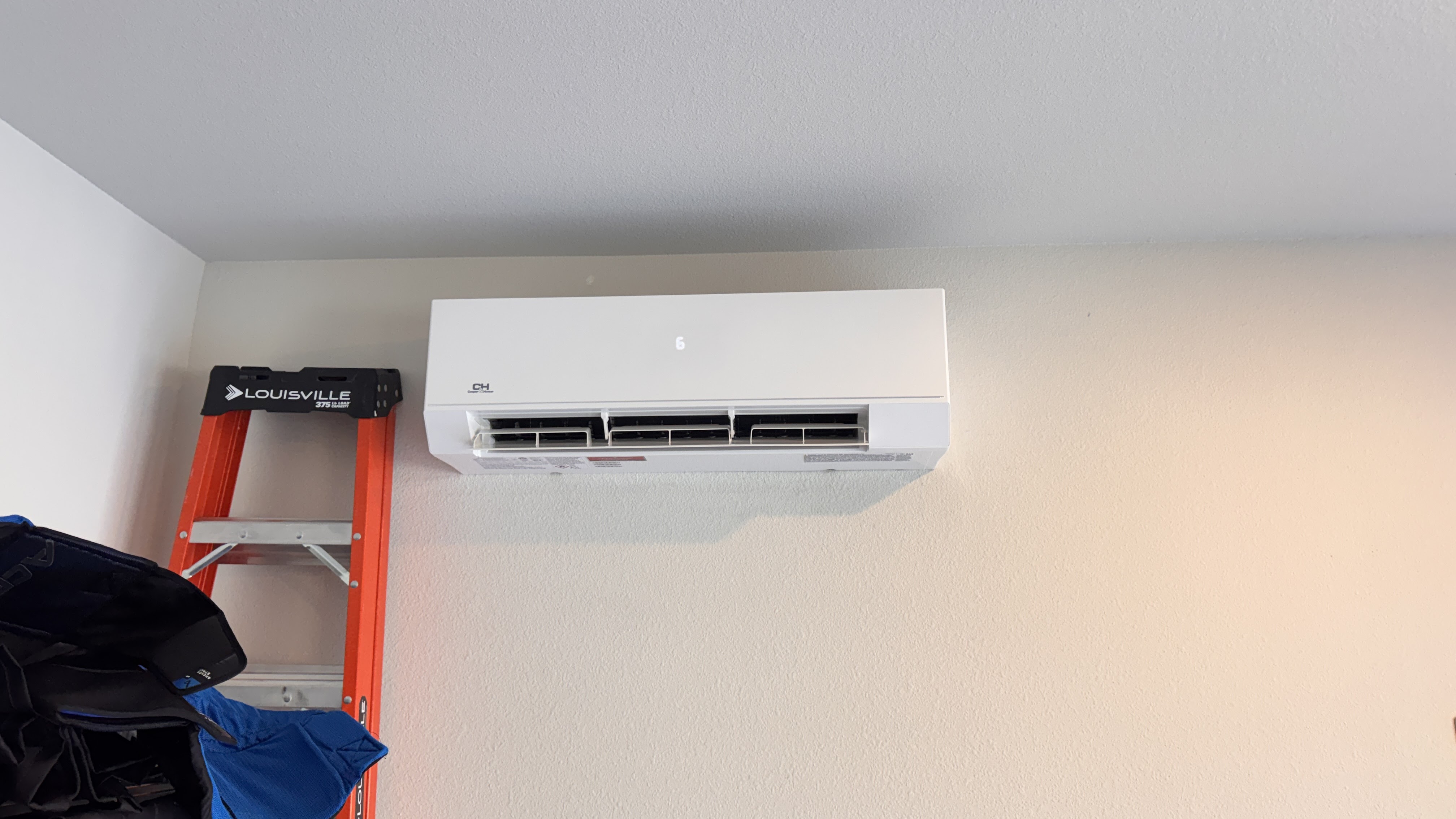
Think of these systems like a car. The outdoor condenser acts as the heavy-lifting engine aggressively rejecting heat, while the indoor air handler functions as the cabin vents, quietly delivering crisp air over your squat rack.
Summary
A properly sized Cooper&Hunter mini split can turn a sweltering Texas garage gym into usable space even in 100–122°F heat. Size around 12,000 BTU (insulated ~20×20), 18,000 BTU (standard), or 24,000 BTU (high ceiling/uninsulated), and choose Sophia for efficient performance up to ~115°F or Dakota (Hyper Heat) for the most extreme temps; use Dry Mode to manage humidity and protect equipment. Mount the indoor unit high and opposite your main workout zone, give the outdoor condenser shaded clearance with a short line set, and meet 230V/20A/12/2 electrical needs. Expect roughly a $20/month summer operating cost, potential Texas rebates, choose DIY vs. pro help for install, and clean filters every 90 days.
Calculating the ‘Texas Tax’: How Many BTUs Does Your 2-Car Garage Really Need?
You know your garage is 400 square feet, but cooling it requires calculating your “cooling load”—the total heat the system must remove. We measure this in BTUs (British Thermal Units). Think of BTUs as your AC’s horsepower; if relentless Texas sun bakes your walls, you need more horses to reach a comfortable lifting temperature.
Standard sizing charts suggest 12,000 BTUs for that area, but they ignore metal doors and 100-degree summers. Enter the “Texas Tax.” Since humidity makes air hold more heat, adding a sizing buffer ensures the unit pulls moisture out before your barbells rust, all without overworking the compressor.
Figuring out exactly how many BTUs for a 2 car garage gym in Texas depends heavily on insulation and room volume. When sizing a mini split for high ceiling garages, remember you are cooling vertical space, not just the floor plan. Follow this 3-tier sizing guide for a standard 20×20 Texas garage:
- 12,000 BTU (Insulated)
- 18,000 BTU (Standard)
- 24,000 BTU (High Ceiling/Uninsulated)
Nailing this math guarantees you won’t be sweating before your warmup even begins.
Sophia vs. Dakota: Which Cooper&Hunter Series Survives the Plano Humidity?
Stepping into a 70-degree garage changes everything. With a WiFi controlled HVAC for home gym , you can start the compressor from your phone 20 minutes before you even lace up your lifting shoes. Now, you must choose between the Cooper and Hunter Sophia series vs Dakota series. Both boast excellent SEER2 ratings—think of SEER2 as your AC’s miles-per-gallon, where a higher number directly translates to cheaper summer electric bills.
Selecting the right hardware depends entirely on your local extreme weather. When evaluating Hyper Heat vs standard mini split for Texas climate limits, consider this breakdown:
- Sophia Series: The efficiency value pick. Conquers typical high heat, cooling reliably even when it reaches 115°F outside.
- Dakota Series: The Hyper Heat powerhouse. Maintains peak cooling performance even when the driveway asphalt hits a blistering 122°F.
Protecting your equipment requires utilizing the built-in dehumidification mode for garage gym moisture control. Running “Dry Mode” wrings out muggy air, actively stopping your expensive iron barbells from rusting.
Strategic Placement for Cool Sets: Avoiding ‘Dead Zones’ in Your Weight Room
Getting blasted by icy air while bench pressing might sound incredible initially, but poor equipment placement actually creates frustrating hot spots. Finding the best location to mount mini split in garage setups means balancing optimal airflow with your workout layout. You want that crisp chill actively hitting your heavy lifting zones, not stirring up messy clouds of dust every time you use lifting chalk.
To achieve this ideal climate, position your indoor air handler high on the wall, roughly seven to eight feet off the ground. This specific height maximizes “Air Throw”—the physical distance the unit can push conditioned air across the room to cool you down. Mounting it opposite your squat rack guarantees a steady breeze while keeping the delicate intake filters safely above the chalk-heavy floor zone.
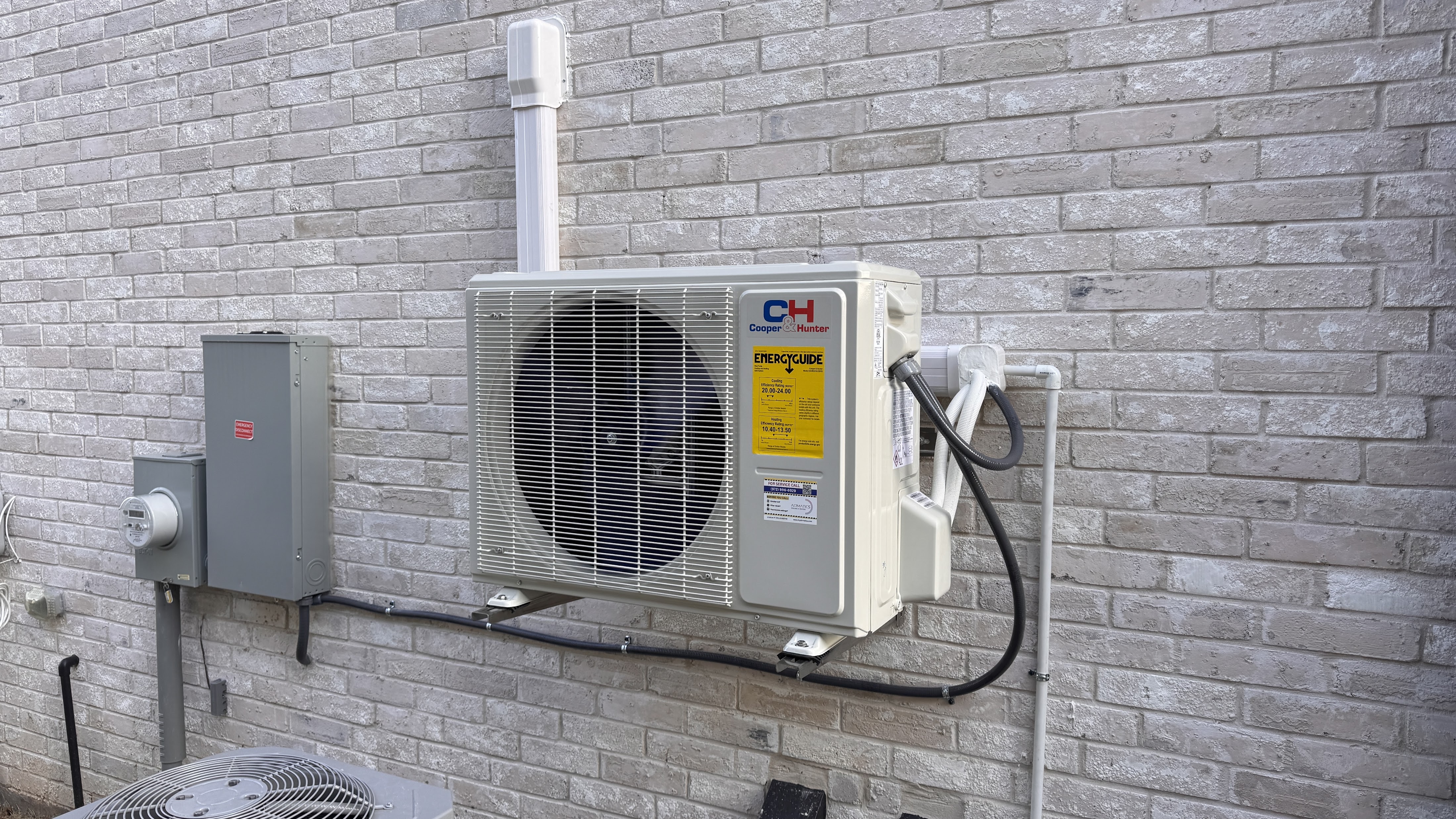
Outside your walls, the outdoor machinery needs ample breathing room to successfully dump all that trapped Texas heat. Proper condenser clearance requires at least two feet of empty, unblocked space around the unit, preferably shaded from the brutal afternoon sun. Connecting these indoor and outdoor components is the “Line Set”—a bundled pair of copper refrigerant pipes—so placing the units relatively close together keeps installation simple and cooling highly efficient.
Every dependable Cooper and Hunter mini split installation guide emphasizes that smart physical placement dictates your overall system performance.
Powering Your Progress: Electrical Requirements and the Real Cost of Texas Cooling
Your standard wall outlets won’t cut it for serious cooling. Navigating mini split electrical requirements for Texas homes means understanding the difference between standard 115V and heavy-duty 230V power. While smaller 115V units simply plug in, a true Texas-sized Cooper&Hunter system requires 230V. This demands a “dedicated circuit”—a private wire running directly to your home breaker panel so your AC never trips the power mid-workout.
Equipping a typical two-car garage requires specific hardware. A standard C&H 18,000 BTU setup needs:
- 230V dedicated power supply
- 20-Amp double-pole breaker
- 12/2 copper wiring
Curious about the cost to run a mini split in Texas summer? Thanks to high SEER2 ratings (the math measuring cooling efficiency), expect roughly a $20 bump on your monthly utility bill.
Reclaiming your space gets even more affordable when claiming Texas rebates for energy efficient mini splits. Texas Tip: Verify your C&H model’s SEER2 rating qualifies for cash back before buying.
From Sauna to Strength: Your Step-by-Step Plan to a Climate-Controlled Home Gym
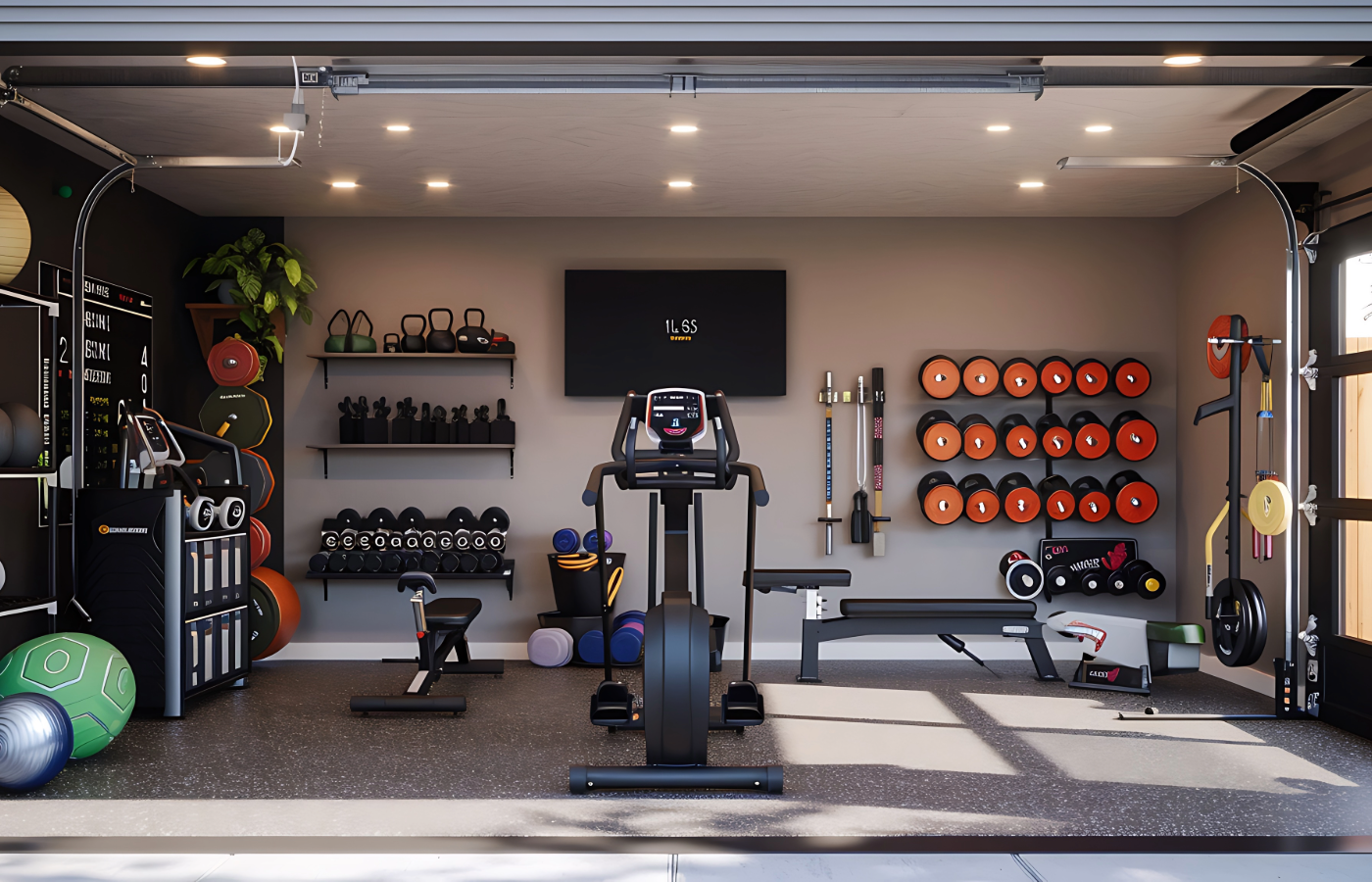
You no longer have to surrender your workouts to the brutal Texas summer. With your sizing mapped out, you are ready to confidently purchase a Cooper&Hunter Sophia or Dakota series system.
For most homeowners, professional mini split installation is the better choice because it helps protect your warranty, avoids costly mistakes, and ensures the system is set up correctly from the start. A proper install is more than just mounting the units — it also includes electrical work, refrigerant line connections, drainage, pressure testing, vacuuming, and startup checks. When done by a licensed HVAC professional, you get better peace of mind, better long-term performance, and you do not have to buy specialty tools or risk damaging the equipment. Once installed properly, you can enjoy the quiet, efficient comfort that Cooper & Hunter wall units are known for.
To maintain that icy air, commit to a strict 90-day filter cleaning schedule. Garage dust builds up quickly, so rinsing these filters every three months protects your equipment and keeps you lifting all year comfortably.
Q&A
Question: Can a Cooper&Hunter mini split really cool a Texas garage gym in 100–122°F heat, and which series should I choose?
Short answer: Yes. Cooper&Hunter systems are built for high-ambient conditions common in Texas. Choose the Sophia series for efficient, reliable cooling up to about 115°F, or the Dakota (Hyper Heat) for peak performance in extreme heat up to roughly 122°F. Pair the unit with WiFi control to pre-cool the space 15–20 minutes before training, and use Dry Mode to reduce humidity so the gym feels cooler and your equipment is protected.
Question: How many BTUs does a typical 20×20 (2-car) Texas garage gym need?
Short answer: Account for the “Texas Tax” (extra capacity for high heat and humidity) and your garage’s insulation and volume. Use this 3-tier guide: 12,000 BTU if insulated; 18,000 BTU for a standard setup; 24,000 BTU for high ceilings or uninsulated garages. Remember you’re cooling volume, not just floor area—more height and poorer insulation demand more BTUs to pull heat and moisture quickly without overworking the compressor.
Question: Where should I place the indoor air handler and outdoor condenser to avoid hot spots and maximize performance?
Short answer: Mount the indoor unit high on the wall (about 7–8 feet) and opposite your main lifting zone to maximize air throw and keep filters above chalk and dust. Place the outdoor condenser with at least 2 feet of clear space on all sides, ideally in shade, and keep the line set short by locating indoor and outdoor units relatively close—this improves efficiency and simplifies installation.
Question: What electrical setup does an 18,000 BTU Cooper&Hunter need, and what will it cost to run in summer?
Short answer: A typical 18,000 BTU C&H unit requires a 230V dedicated circuit, a 20-amp double-pole breaker, and 12/3 copper wiring. Thanks to strong SEER2 efficiency, expect roughly a $20 increase on your monthly bill during Texas summers. Check for Texas energy-efficiency rebates and confirm your chosen model’s SEER2 rating qualifies before purchase.
Question: Should I DIY the install or hire a pro?
Short answer: Hire a pro. Mini split installation includes refrigerant work, electrical setup, drainage, and startup testing — not just mounting the unit. Professional installation helps protect your warranty and avoid costly mistakes.
