
Introduction to Air Conditioning Systems
An air conditioning system relies on several critical components, and the expansion valve, a mechanical device responsible for regulating refrigerant flow, is one of the most vital. It plays a key role in regulating refrigerant flow and temperature, ensuring your system operates efficiently—especially during Texas’ brutal summer months.
Understanding how the expansion valve works helps you maintain a healthy HVAC system. In many HVAC systems, the expansion valve, also known as a thermal expansion valve, controls refrigerant flow and regulates temperature. A faulty valve can lead to poor cooling, high energy bills, and damage to other system parts. With regular maintenance, you can catch issues early and keep your system running strong.
Expansion Valve Overview
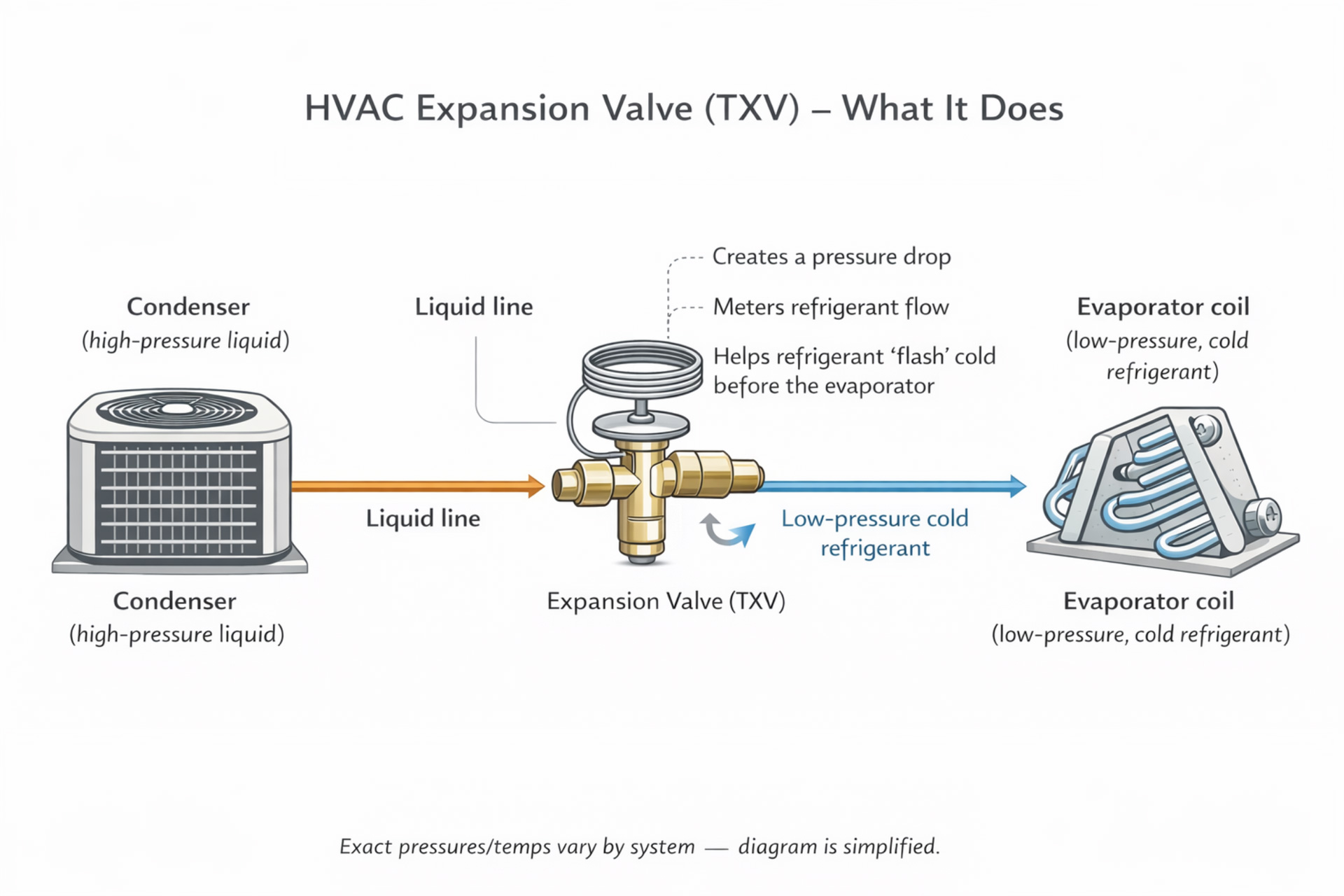
The expansion valve is a mechanical metering device located near the evaporator coil. Its job is to reduce the pressure of the high-pressure liquid refrigerant coming from the condenser, resulting in a decrease in both pressure and temperature. This decrease is essential for proper system operation, as it creates a low-pressure region on the evaporator side. This causes part of the refrigerant to evaporate (flash), lowering its temperature and making it ready to absorb heat from your home.
The expansion valve contains an orifice that restricts refrigerant flow. Imagine this orifice as similar to a faucet handle in your kitchen. Just like turning the faucet handle regulates the water flow to your desired level, the expansion valve opens to allow the refrigerant to pass through and expand, providing precise control over the amount entering the evaporator.
Key Functions:
- Controls refrigerant flow into the evaporator coil
- Creates a pressure drop that allows the refrigerant to become cold
- Regulates system cooling capacity
A failing valve may result in:
- Hot air from vents
- Frozen evaporator coils
- Compressor short cycling
- Increased energy bills
Electronic Expansion Valve (EEV)
Modern systems may use an electronic expansion valve (EEV) instead of a mechanical one. EEVs are more precise and allow better control over refrigerant flow under variable load conditions. These valves utilize both pressure and temperature sensors to make real-time adjustments, helping maintain consistent comfort levels even as environmental conditions fluctuate. Specifically, suction temperature sensor feedback is used to fine-tune refrigerant flow, directly linking the electronic control systems to improved user experience and consistent indoor climate.
Benefits of EEVs:
- Enhanced energy efficiency
- Better cooling performance
- Reduced maintenance frequency
- Remote controllability (in some systems)
EEVs can adjust refrigerant flow more precisely than mechanical valves, thereby optimizing system performance. The electronic controller is responsible for adjusting the valve and refrigerant flow by opening and closing the valve electronically. The EEV dynamically adjusts refrigerant flow in response to system conditions, ensuring optimal performance and efficiency. These valves use a stepper motor and controller to adjust the valve opening in real time based on sensor data. They’re more common in newer or high-efficiency systems, including variable-speed and inverter-driven ACs.
Expansion Valve Function in the Cooling Cycle
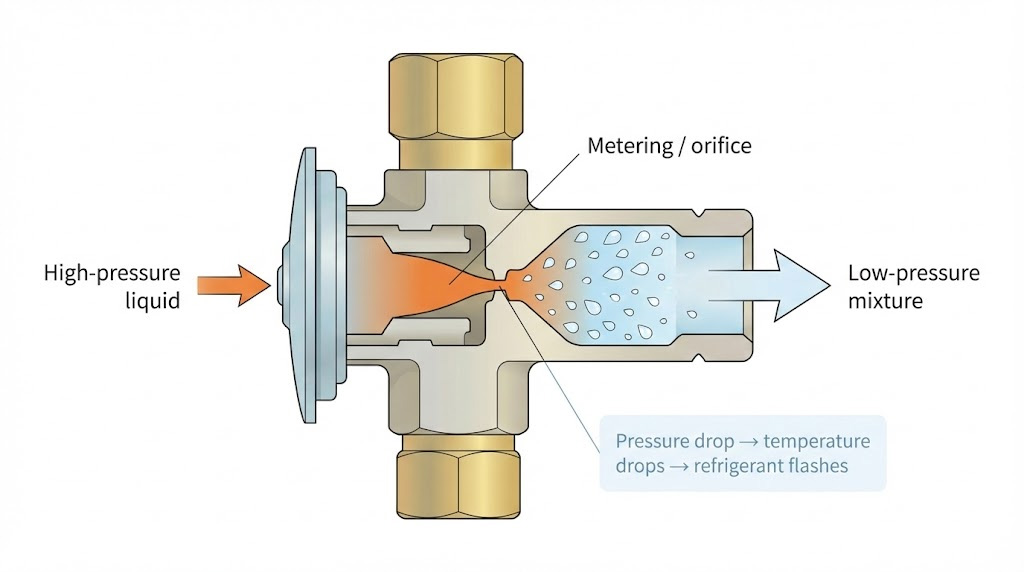
The expansion valve works hand-in-hand with the compressor, condenser, and evaporator coil. Its role is to: The expansion valve responds to pressure changes and the temperature of the refrigerant to regulate flow and maintain optimal system operation.
- Lower the refrigerant pressure entering the evaporator and control the amount of refrigerant entering it.
- Ensure refrigerant absorbs enough heat inside your home.
- Avoid overfeeding or underfeeding refrigerant, which can harm performance or damage components.
As the refrigerant passes through the valve, it experiences a drop in pressure and temperature, causing the refrigerant to change state and allowing it to reach its boiling point inside the evaporator coil. The pressure inside the system is carefully managed by the expansion valve to ensure efficient operation.
If the valve fails to operate correctly, your system may suffer from inefficiency, uneven temperatures, and even component failure.
Types of Expansion Valves
Here are the common types of expansion valves used in residential and light commercial systems. Most residential HVAC systems use a thermal expansion valve (TXV) for efficiency. Heat pumps often require two TXVs for bidirectional operation.
| Type of expansion valve | Description |
|---|---|
| TXV (Thermostatic) | A thermal expansion valve that uses a sensing bulb, needle valve, adjustable spring, and diaphragm to regulate refrigerant flow based on evaporator temperature. |
| EEV (Electronic) | Controlled by circuit board and sensors for real-time refrigerant control; replaces the mechanical needle valve with a stepper motor. |
| AEV (Automatic) | Maintains constant evaporator pressure using spring force; not common in homes. |
| Capillary Tubes | Simple, fixed-bore devices often used in window AC units or mini splits. |
Most Texas homes with central AC systems will use a TXV. EEVs are more likely in high-efficiency models from brands like Trane or Bosch.
Proper installation and maintenance of refrigerant lines is essential for all valve types in HVAC systems.
Faulty Expansion Valve: Signs and Symptoms
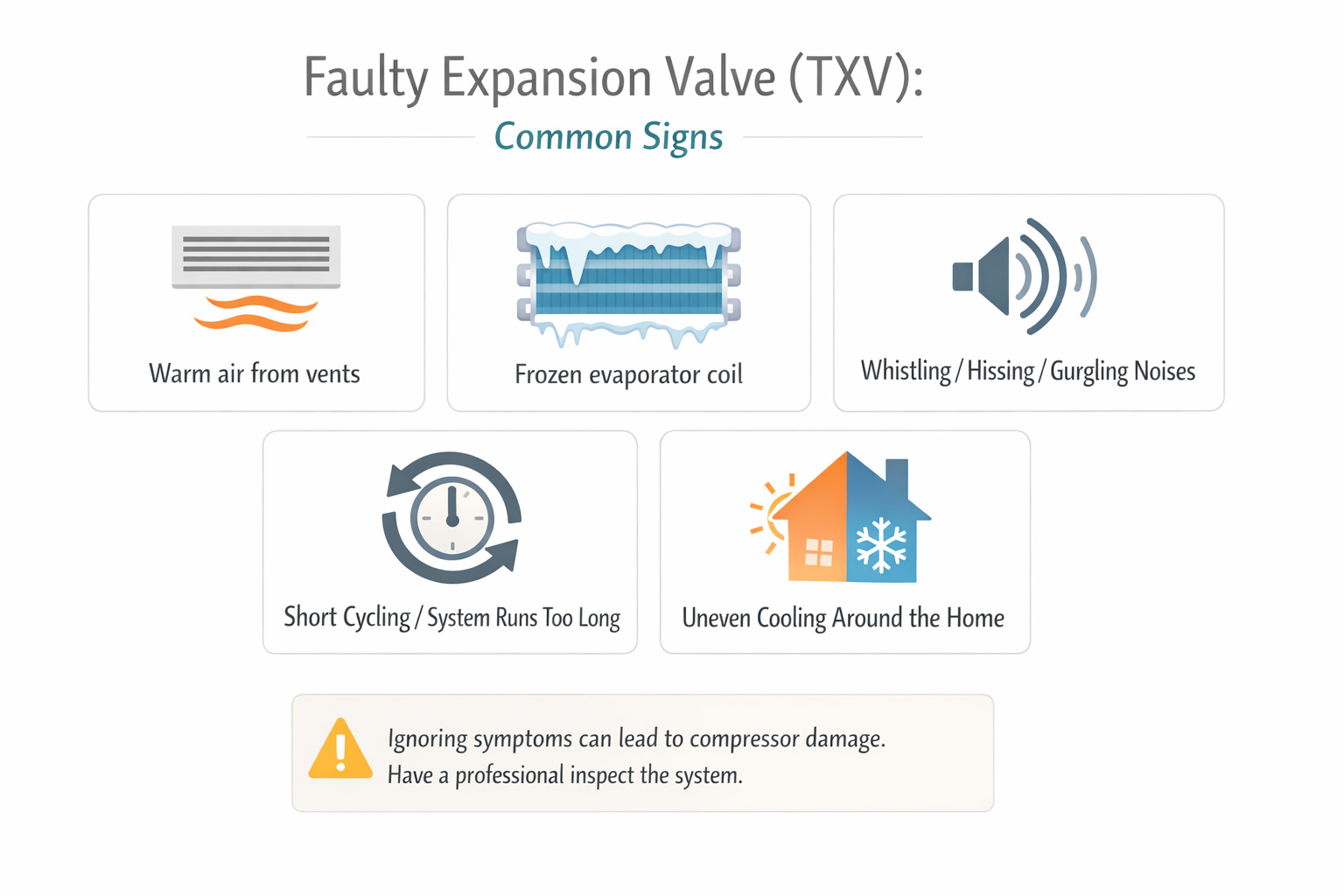
A faulty expansion valve can quickly disrupt the performance of your air conditioning system. One of the most noticeable signs is when your air conditioner starts blowing warm air instead of cool, which often points to improper refrigerant flow caused by a malfunctioning valve. If the expansion valve fails to regulate refrigerant flow, the system may run continuously as it struggles to reach the desired temperature, leading to higher energy bills and unnecessary strain on the compressor.
Other warning signs include frozen coils, which occur when the flow of refrigerant is restricted or inconsistent, leading to the evaporator coil icing over. You might also hear unusual noises—such as whistling, hissing, or gurgling—coming from the air conditioning system, which can indicate abnormal flow of refrigerant through the valve. Inconsistent temperatures throughout your home and sudden drops in cooling performance are additional red flags.
Ignoring these symptoms can result in further damage to your air conditioning system, including potential compressor failure and costly repairs. If you notice any of these issues, it’s important to have your system inspected by a professional to determine if a faulty expansion valve is to blame.
Preventing Expansion Valve Issues
Preventing problems with your expansion valve starts with regular maintenance of your air conditioning system. One of the simplest yet most effective steps is to keep your air filter clean and replace it as recommended. A clogged filter can allow debris to accumulate, which may eventually reach the expansion valve and disrupt refrigerant flow. Moreover, it’s not just about system efficiency; a neglected filter can also impact your wallet. For example, a dirty filter can increase static pressure, forcing the system to work harder and potentially adding around $150 annually to your energy bills due to increased energy consumption. By keeping filters clean, you not only protect your system but also save on energy costs.
It’s also important to routinely check refrigerant levels to ensure they are within the manufacturer’s recommended range. Low refrigerant can force the expansion valve to work harder, increasing the risk of malfunction. During annual inspections, a technician should examine the expansion valve, including the sensing bulb and valve body, for any signs of wear, corrosion, or blockage.
Proper installation and configuration of your air conditioning system are equally crucial. An incorrectly installed system can lead to improper refrigerant flow and pressure, putting unnecessary stress on the expansion valve and other components. By staying proactive with these preventive measures, you can help ensure smooth operation, extend the life of your air conditioning system, and avoid unexpected breakdowns.
Replacing the Expansion Valve in Texas
When an expansion valve fails, a professional HVAC technician should be called to replace it. This involves:
- Recovering the refrigerant
- Removing the faulty valve
- Installing a properly matched valve, ensuring the new valve’s inlet and outlet connections match the existing refrigerant lines for proper fit and flow
- Recharging the system with refrigerant
- Running tests for correct superheat and performance
Correct installation ensures refrigerant flows efficiently through the AC unit, maintaining system performance.
Texas-Based Cost Breakdown
| Service Type | Part Cost | Labor Cost | Total Installed Cost |
|---|---|---|---|
| OEM TXV Replacement | $150 – $350 | $250 – $450 | $400 – $800 |
| Generic TXV / Basic Valve | $80 – $200 | $250 – $450 | $350 – $650 |
| Electronic Expansion Valve | $300 – $600 | $300 – $500 | $600 – $1,100+ |
Prices may vary by AC brand, refrigerant type (e.g., R-410A vs R-22), and accessibility of the valve location. Always request a quote.
Maintenance Tips for Longevity
- Schedule annual AC tune-ups to inspect refrigerant levels and ensure proper flow through all components, including the condenser, filter dryer, expansion valve, evaporator, and compressor.
- Inspect the suction line for proper temperature and pressure, as this helps monitor the refrigerant leaving the evaporator and ensures efficient system operation.
- Monitor the temperature of the refrigerant leaving the evaporator coil to help diagnose system performance and identify potential issues with the thermostatic expansion valve (TXV).
- Keep air filters clean to avoid coil icing and airflow restriction.
- Watch for signs like weak airflow, noise, or frost on coils—these may indicate valve issues or problems with refrigerant leaves and flow.
Preventive care goes a long way in avoiding mid-summer breakdowns in Texas.
Should You DIY an Expansion Valve Replacement?
In short: no.

Because expansion valves are part of a sealed refrigerant circuit, replacing one requires:
- EPA certification to handle refrigerants
- Refrigerant recovery and recharging tools
- Pressure testing and superheat adjustments
Hiring a certified HVAC tech ensures safety, compliance, and system reliability.
Call AirMatics for Expert AC Diagnostics
If you suspect your AC expansion valve is causing cooling issues, don’t sweat it; we’ve got your back. Our licensed technicians serve Plano, Frisco, McKinney, Dallas, and the surrounding Texas areas with prompt diagnostics and expert repair.
Book your expansion valve inspection today:
Contact us or call 469-707-9559 to enjoy a cool home with peace of mind and avoid surprise costs.
Conclusion
In summary, the expansion valve is a critical component in any air conditioning system, responsible for regulating refrigerant flow and maintaining optimal cooling and heating performance. Recognizing the signs of a faulty expansion valve—such as warm air, constant running, and frozen coils—can help you address issues before they escalate into major repairs. Regular maintenance, including cleaning or replacing air filters, checking refrigerant levels, and inspecting the expansion valve and its components, is essential to prevent problems and ensure your system runs efficiently.
Whether your system uses a thermostatic expansion valve, electronic expansion valve, or a capillary tube, proper care and attention are key to keeping your air conditioning system in top shape. By taking these proactive steps, you can enjoy reliable comfort, lower energy bills, and peace of mind knowing your HVAC system is protected against common issues related to regulating refrigerant flow.
